





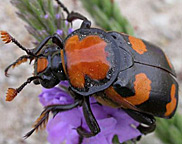
How this particular insect, pictured, became extinct is still subject to controversy. Speculation, however, regarding the decline may be attributed to artificial lighting that decreases populations of insects active at night, diminished carrion (dead stuff) needed to feed the larvae due in part to competition for it, and possibly genetic factors.
Okay, I asked myself, what is the significance in this case of interfering with the theory of survival of the fittest? Instituting such a program takes money, albeit, hopefully private funding from those do-gooders who save anything that's endangered.
I am open to understanding the significance of preserving this particular bug, other than for preservation itself. The only benefit I could find was that, in addition to cleaning up dead stuff, it eats insects, but no where did I find the benefit of either. Does it eat insects that might also become extinct? Could the money that this project entails be better spent on finding a remedy for white nose syndrome seriously affecting bat populations, a greater devourer of insects? Does the mite that lives on its back need its host to survive? Do we care?
Why worry about one insect that most of us have never seen? I'm a pragmatist by nature. For those who may be more idealistic, I'm including this comment from the World Wildlife Fund:
"All that lives beneath Earth's fragile canopy is, in some elemental fashion, related. Is born, moves, feeds, reproduces, dies. Tiger and turtle dove; each tiny flower and homely frog; the running child, father to the man and, in ways as yet unknown, brother to the salamander. If mankind continues to allow whole species to perish, when does their peril also become ours?"
Commentary by Mari Winn Taylor
Comments