





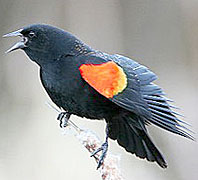
RED-WINGED BLACKBIRD (Photo by Ted Schroder)
Ithaca, NYAs oil washes ashore along the Gulf Coast, the Cornell Lab of Ornithology is asking birders to keep an eye on nesting birdsnot just near water, but hundreds of miles inland.
Wildlife biologists are monitoring species such as pelicans and plovers in the immediate path of the oil, said Laura Burkholder at the Cornell Lab of Ornithology. But we need bird watchers across the country to help us find out if birds that pass through or winter in the Gulf region carry contamination with them, possibly creating an oil shadow of declines in bird reproduction hundreds of miles from the coast.
To help, Burkholder said that anyone with an interest in birds can learn how to find and monitor nests as part of the Cornell Labs NestWatch project It involves visiting a nest for a few minutes, twice per week, and recording information such as how many eggs it contains, how many chicks hatch, and how many leave the nest.
Many birds that nest in backyards all across North America, such as Red-winged Blackbirds and Tree Swallows, spend part of the year along the Gulf of Mexico, where they could be affected by the oil spill, Bukholder said. Toxins often have profound effects on reproduction, and its possible that toxins encountered in one environment can affect the birds in another environment, after they arrive on their breeding grounds.
When participants across large regions contribute information, Burkholder said, scientists can assess changes in nesting success in relation to environmental factors such as habitat loss, climate change, and pollution.
Citizen-science participants have helped the Cornell Lab monitor the success rates of nesting birds for 45 years. Now, Burkholder said, its especially critical to capture data on nesting birds to reveal the health of birds before they encounter the oil spillas well as in the years ahead, to detect possible long-term effects.
To participate sign in here.
Comments